Fine particles
What it is
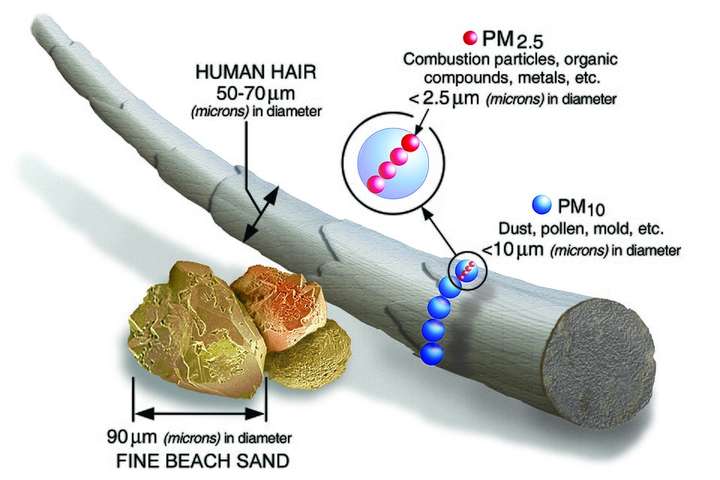
Particles smaller than 2.5 µm (micrometers, millionths of a meter): smoke, exhaust, and particles that form in the air from gases. Small enough to reach the deepest parts of the lung.
How it affects breathing
- Evidence. Seen in emergency-room studies: asthma visits rise about 4 % for every 10 µg/m³ (micrograms per cubic meter of air), and wildfire smoke hits harder per microgram than city particles do.
- How likely. In most of the US, most days sit under 10 µg/m³, where the effect is small. The days that matter are smoke days and still winter days when the air does not move.
- What helps. Particles are what a filter catches, so an N95 mask outdoors and a HEPA air cleaner indoors both cut the dose a lot, and moving hard exercise indoors cuts it more. A rescue inhaler opens airways the particles have tightened; it does not remove them.
How Breathing Index measures it
Your Breathing Index uses the average of the last 24 hours of measurements, since the health studies and the official limits are daily, and one bad hour says less than a bad day.
Where the number comes from
- A monitor when one is within about 50 miles: an instrument run by your state environmental agency, published through the EPA’s AirNow.
- Otherwise a model: a computer estimate of the air from satellites, weather and emissions data on a 45-kilometer (28-mile) grid. A model is a prediction, not a measurement, and it can miss a plume a monitor would catch.