Smoke
What it is
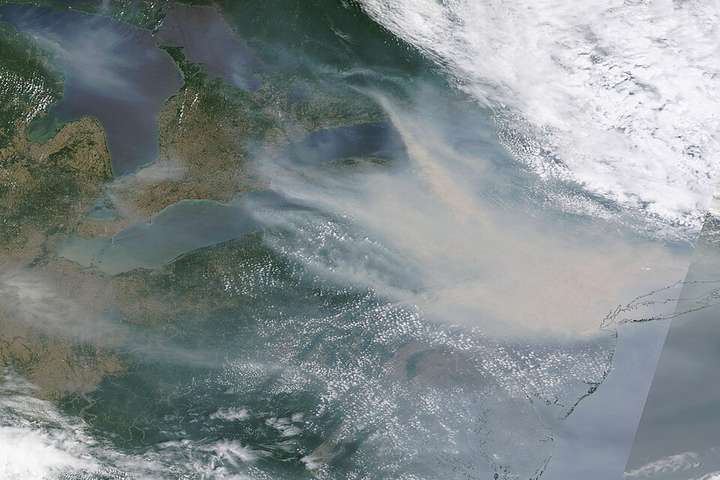
A smoke plume drawn over this location by an analyst at NOAA (the US weather agency) from satellite pictures, rated light, medium or heavy. Counted only when the particles at ground level are mostly fine ones, which is what smoke is made of.
How it affects breathing
- Evidence. Seen in emergency-room studies: asthma visits rose 82 % in New York in one day of June 2023 smoke, and per microgram, smoke is two to three times as bad as ordinary fine particles.
- How likely. A few days in a bad year and none in most. Since 2023, Canadian fire smoke has been reaching farther into the United States than it used to, and nobody knows how often it will come back. The effect can linger a day or two after the sky clears.
- What helps. Particles are what a filter catches, so an N95 mask outdoors and a HEPA air cleaner indoors both cut the dose a lot, and moving hard exercise indoors cuts it more. A rescue inhaler opens airways the particles have tightened; it does not remove them. Windows shut is the third thing, since a smoke day is the one day the air inside can be made cleaner than the air outside.
How Breathing Index measures it
Your Breathing Index takes the current hour, since a plume is either over a place or it is not; there is nothing to average. Satellites need daylight to see smoke, so at night the plume shown is the afternoon’s.
Where the number comes from
NOAA’s Hazard Mapping System, plus the fine-particle reading above it.